|
|
|
|
Photograph by Jenn de Groot
 By Colt Antle
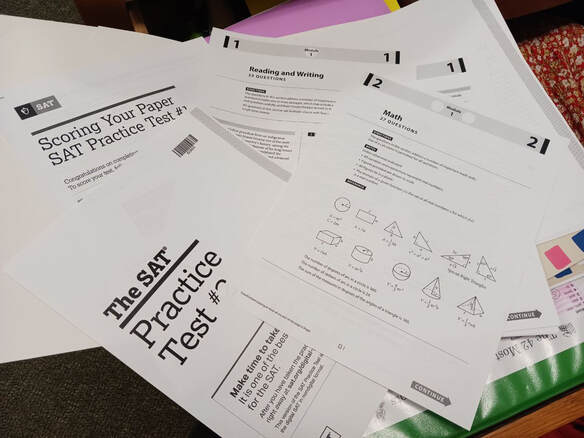
With the SAT and PSAT9 and PSAT10 fast approaching many students are incredibly stressed, with some even feeling unprepared for such an important test. This stress is only compounded by the fact that it follows the CMAS that all juniors took on April 8 and April 9, 2024. Teachers have done their part, attempting to prepare students for the upcoming tests, by teaching content, and allowing class time to make sure software is on the student’s computers and functioning properly before mass testing; a little extra help can go a long way. Over the years, many test takers have left tips on what they did to better themselves during the two exams. These involve developing better sleep habits the week before the test, making sure you have breakfast or something to eat before you take the test, pace yourself during the test, and check your answers carefully. A good thing to remember is that it’s okay to guess, what matters the most is that all your bubbles are filled in regardless of if they're correct or not. Another thing to remember is when you are running short on time and you haven’t answered all of the questions, just choose one letter and bubble them all in. Below are links to practice tests for the SAT and Pre-SAT in case anybody would like the opportunity to take a practice version of the actual test. https://satsuite.collegeboard.org/sat/practice-preparation/practice-tests https://satsuite.collegeboard.org/psat-nmsqt/preparing/practice-tests By Colt Antle
On March 14, 2024, Pueblo County High School kicked off their Make-A-Wish Week with the Make a Wish assembly. This shared with everyone the founding of Make-A-Wish and why it is so important to help bring in donations to help the children whose wish we are granting. Students were introduced to six year old Poppy along with her wish of going to Hawaii. The audience also learned about the different milestones they could reach if enough money was brought in, as well as all the events that would transpire in the coming week. Thursday is jersey day, Monday is disney day, Tuesday is beach day, and Wednesday is Make-A-Wish day. Not to mention the donuts that people race for and the little ducks that are hidden around the school at this time. All of the money gathered during the events, donations, and the purchasing of Make-A-Wish shirts will later go on to be tallied up in the process of achieving Poppy’s wish. As part of Pueblo County High School’s Make-a-Wish Week, students and teachers participate in Penny Stalls. On this special day, PCHS students collect spare change and dump it on their 3rd-hour teacher’s desk. The teachers are not allowed to start class until all the change has been counted. The change that the teachers count is collected by PCHS DECA and donated to the Make-a-Wish Foundation.
PCHS students enjoy Penny Stalls no matter what, but it is always more fun when everyone participates. Several students in the PCHS journalism class expressed their disappointment that their teacher did not participate. The point of Penny Wars is to encourage students to bring in donations and support others. By not following the rules, teachers could discourage students from participating. This will have a negative impact on the donations raised for Make-a-Wish, the students’ relationship with their teachers, and the enthusiasm of students to participate in future activities. Perhaps, simply taking 55 minutes to count pennies for charity will help not only the Wish kid but also inspire student participation. Hopefully next year, teachers will realize the importance of participating in school-wide events and the impact that their actions have on the students. Thank you to everyone who participated. We also heard the fun stories and feedback students gave on the classes that did participate! By Haylee Huset
On March 19, 2024, The juniors and senior boys played the sophomore and freshman boys in a head-to-head volleyball battle for Wish Week sponsored by DECA. This is the first time this event took place, but it was a big hit and hopefully, it will become an annual part of Wish Week festivities. All the processes from admission and entry fees toward our $25,000 goal to help send Poppy to Hawaii. The seniors and juniors ended up winning the game in 5 sets. Juniors, Haylee Huset and Weynishet Franworth refereed the game. It was a great game with an even better mission. By Shania Martinez
On Tuesday, February 13, 2024, 6 p.m. to 7:30 p.m. was Pueblo County’s 8th Grade Night. Eighth-grade night happens every year at Pueblo County High School to help the upcoming freshman navigate through their new school. Parents appreciate the tour of the school to get a perspective of what kind of environment their kids will be in for the next 4 years. To start the 8th-grade night off Principal, Mr. Brian Dilka, introduced himself in the Hornet gymnasium. After the introduction of administrative staff and instructors the band played, and then the dance team performed. These performances can help the incoming freshman decide if that is something their interested in. Once the performances were done the eighth-graders took a tour of PCH to get an idea of what their classes might look like. Many student clubs and all instructors were on hand to answer any and all questions from both students and the parents. Eighth Grade Open House is a great yearly event that helps the upcoming freshmen and parents in so many ways. It’s always exciting to see new Hornets join the nest. By, Abigail Medved On Feb. 19, 2024, several Pueblo County High School students traveled to Denver to compete in the HOSA State competition. During the HOSA State competition, students compete in events that pertain to their desired medical career. “HOSA is a club that helps prepare students for the medical field and is a major asset to students as it provides real-world experience that engrosses them in their dream field,” said Junior Willow Stephenson. Those who participated had a great time and finished well! “I love being a part of HOSA,” said Stephenson. “My dream job is working as an OBGYN, and I feel as though HOSA has been a great tool to prepare me for that. Besides the practical aspect, it's simply a fun club. I've met many friends through it and has given me great memories.” The students benefited from this experience and would encourage others to join in the future. “I highly recommend HOSA to anyone interested in medicine or science. There is undoubtedly an event for everyone, so give it a try! There are even dentistry and veterinary events,” said Senior Amanda Alfonso. “At state, endless opportunities exist. It's an excellent opportunity to place yourself in a healthcare environment to see if the medical field could be the right fit for you.” Good job Hornets! 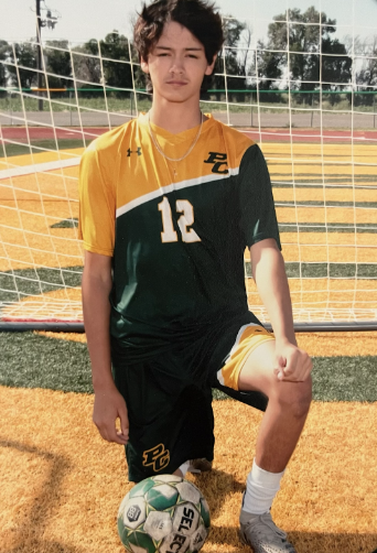 By Audrey Schmitz Nick Schmitz is a senior at Pueblo County High School, and has been on the JV soccer team all four years. He was a captain for his senior season. He has been putting in the work at practices, which take around seven to eight hours per week. He has worked with many coaches including Coach Gibson, Coach Timmins, and Coach Granato. Through this hard work he has achieved many accomplishments. His biggest accomplishment was scoring some impressive goals. His biggest obstacle this past season were his injuries. He suffered a concussion just past halfway through the season and wasn’t cleared to play in games. He worked his hardest in practices and helping his team succeed. “My biggest obstacle was getting a concussion because that makes it hard to play,” he said. Nick has played soccer for most of his life, starting when he was three years old. He’s been on different teams for every season since then. He has been supported by family and friends in his sport. His future plans are to be in the military, which he has already begun preparing for, he plans on enlisting in the Army. Schmitz said, “ the Army is my new soccer.” Once he has access to it again, he plans to continue his sport in his own time. He does plan to devote the majority of his time to the Army. One jump, flip, and dive away - Lily Nibert strives to be the best in and out of the water2/21/2024
Kaylina Frates
Pueblo County High School is proud to be home to Lily Nibert, A freshman diver who is extremely talented and passionate about her sport and her academic future. Lily devotes most of her time to perfect her skill. She consistently shows tremendous promise for the future in her athletic career. Lily said that, “she goes to practice every day from around four to six, Monday through Thursday, and then I go again on Fridays from 9am to a little after 10am. So I am spending around nine hours each week practicing. We frequently have invitationals on Saturdays which normally take around four hours including warm up time.” Lily’s parents have been a huge support to her throughout the season. Not only is it amazing to have such supportive parents but they also seem to play a role in how far Lily is willing to push herself to success. Lily mentions “I have always felt fortunate to have parents that allowed me to know what it is like to have to work for what you want. So my parents have helped me so much in all of the sports that I do., but my coaches as well have always been so amazing to work with. Radiff is one of the best coaches I have ever had and he is a very large contributor to where I am in my athletics. He is so good at pushing me and my teammates so that we always try new things without getting too nervous.” Given though she is only a freshman and qualified for state proves that hard work pays off. Lily explains that not only is this a physically draining sport but a mentally draining one as well, “This is my first year trying out diving so my biggest obstacle was definitely just getting started. It was very rough in the beginning and I didn’t really know what I was doing quite yet. Another thing is how mentally challenging this sport is. You really can't let yourself get in your own head or things wont go as planned. But I would say my biggest accomplishment is just how much I have grown and where I am placing in some of the larger meets. I was able to qualify for state within my first few meets which I am proud of.” Lily's previous sports has helped her shape the diver she is today, knowing the basics really put her on the path to success so the knowledge and hard work came naturally to her. “I have done gymnastics my whole life and so many of the girls that were years above me did diving. I have heard from my teammates and so many of the people around me how easy diving would come for me because of my experience in gymnastics. So since this was my first year I don’t really have many memories of this sport, but gymnastics really has helped me a tremendous amount.” Lily's goals have not yet been made but one thing is clear, She is amazing at what she does “I have no specific goals for this sport because I mainly just wanted to try it out and give myself something to do. I plan to do this throughout my high school career and to improve every year. I hope to eventually get my name known and to place exceptionally in some of the very large meets.” If Lily doesn't show what it means to be an honorary member of the hornet family then i don't know what will because she has put hours into diving after school and on weekends, challenged herself to trying a new sport that she has never done before, and being one of the best divers on the team all while only in the ninth grade. |